I have to give credit to my friend G. for this idea (whom I spent basically 24 hours with this past Friday and Saturday - more later...). He said that his father used to make it for breakfast when he was growing up. It's basically spaghetti with scrambled eggs. I made it for our brunch Sunday morning.
My take on it involved leftover eggplant and cherry tomato pasta sauce topped with curds of softly scrambled eggs and a drizzle of "plain" yogurt (the plain in quotations because this is Korea and so it's on the sweet side of plain). M. scrambled the eggs and they were nice and pillowy.
Showing posts with label seoul cooking. Show all posts
Monday, June 20, 2011
Saturday, February 26, 2011
Seoul Cooking: Salteñas Cakes
This came about because I wanted to make something nice for Sunday brunch at home without having to go to the store first. We've been eating out a decent amount recently so there wasn't much to build on. M. reminded me about a bag of sweet potatoes that we needed to use. With that, I decided to make a kind of potato cake using twigim flour. While I was cooking the cakes I thought about what to pair them with, since we didn't have any sour cream or plain yogurt, my usual potato cake accompaniment. We had all kinds of hot sauce to shower them with, but that alone seemed kind of boring. Suddenly, I remembered the two hard boiled eggs we had sitting in the fridge. Combined with raisins and chopped green olives, it became a salteñas-inspired topping for the sweet potato cakes, an homage to Julia's. Eating them was a bit like eating a deconstructed empanada.
| Hard boiled eggs, olives, raisins - somehow, it works |
Serves 2 for a hearty brunch
For the salteñas topping:
*2 hard boiled eggs, chopped into bite-sized pieces
*10-12 green olives, chopped
*a small handful of raisins
*dash of freshly ground black pepper
For the cakes:
*3 small sweet potatoes, peeled and shredded
*Half a thinly sliced onion
*Twigim flour (seasoned flour for deep frying; substitute all-purpose flour with a bit of garlic powder and salt)
*1 teaspoon chili powder
Whisk the flour and chili powder with water until you get a thin batter (I didn't measure; pancake batter consistency or maybe a bit thinner). When the batter is smooth and lump-free, mix in the sweet potatoes and onion.
| Beautifully browned cakes |
Thursday, February 17, 2011
Seoul Cooking: Moo Mu Jorim
Okay, so maybe the title of this recipe is a bit too clever. It's a crosslinguistic description of the main ingredients in this dish: pork (using the Thai word) and Korean radish (which is like a chubby Japanese daikon). While it might evoke blousy Hawaiian beachware, it's intended to reflect the main inspirations for this dish: a meatball recipe from a popular Korean blogger, a Chinese-Thai dish that my friend A. taught me how to make in Chiang Mai this past December called "puh-loh," and a soy-simmered Korean pickle of cucumbers, hot peppers and the aforementioned radish that I watched the early stages of making but unfortunately was unable to sample at Cheonjangsa and still need to research, called, simply, "지" (ji) (some of the monks had never heard of it).
I intended this as a banchan that you eat with rice and other side dishes. It's pretty strongly flavored. The meatballs were extra delicious with the addition of some tangerine gochujang that I got from my host on Jeju.
Moo Mo Jorim
Makes approximately 6-8 servings as a banchan
Meatballs:
-Ground pork approx. 1/2 pound or 300 grams
-Gochujang (Korean red pepper paste) 1-2 teaspoons
-Soy sauce, generous splash
-1 clove garlic, minced
Radish:
-One large mu, peeled and cut into 1" chunks
Seasoning (to your taste):
-1-2 Tablespoons Soy sauce
-1 teaspoon brown sugar
-Several splashes apple cider vinegar
1. Mix the meatball ingredients thoroughly. Roll the meatballs into approx. 1" balls. Steam for about 10 minutes or until cooked through.
2. Meanwhile, in a large wok pan or pot, heat up a bit of oil over medium heat. Add the radish pieces and stirfry for a few minutes, then add the soy sauce, brown sugar, and apple cider vinegar, plus 1-2 cups of water (just enough to cook the radish and make a broth). Bring to a boil, then reduce the heat to low, cover and simmer until the radish is cooked.
3. When the meatballs are finished steaming, add them to the pot containing the radishes, stirring carefully to coat them in sauce. Add water if needed, then cover again and simmer to incorporate the meatballs (as long as you want but just a few minutes is probably enough).
4. Serve with rice as part of a Korean-style meal with other side dishes. Cucumbers are nice.
| Mooooooooooo |
I intended this as a banchan that you eat with rice and other side dishes. It's pretty strongly flavored. The meatballs were extra delicious with the addition of some tangerine gochujang that I got from my host on Jeju.
Moo Mo Jorim
Makes approximately 6-8 servings as a banchan
Meatballs:
-Ground pork approx. 1/2 pound or 300 grams
-Gochujang (Korean red pepper paste) 1-2 teaspoons
-Soy sauce, generous splash
-1 clove garlic, minced
Radish:
-One large mu, peeled and cut into 1" chunks
Seasoning (to your taste):
-1-2 Tablespoons Soy sauce
-1 teaspoon brown sugar
-Several splashes apple cider vinegar
1. Mix the meatball ingredients thoroughly. Roll the meatballs into approx. 1" balls. Steam for about 10 minutes or until cooked through.
2. Meanwhile, in a large wok pan or pot, heat up a bit of oil over medium heat. Add the radish pieces and stirfry for a few minutes, then add the soy sauce, brown sugar, and apple cider vinegar, plus 1-2 cups of water (just enough to cook the radish and make a broth). Bring to a boil, then reduce the heat to low, cover and simmer until the radish is cooked.
3. When the meatballs are finished steaming, add them to the pot containing the radishes, stirring carefully to coat them in sauce. Add water if needed, then cover again and simmer to incorporate the meatballs (as long as you want but just a few minutes is probably enough).
4. Serve with rice as part of a Korean-style meal with other side dishes. Cucumbers are nice.
Thursday, December 9, 2010
Tip: Cheater's Omuraisu
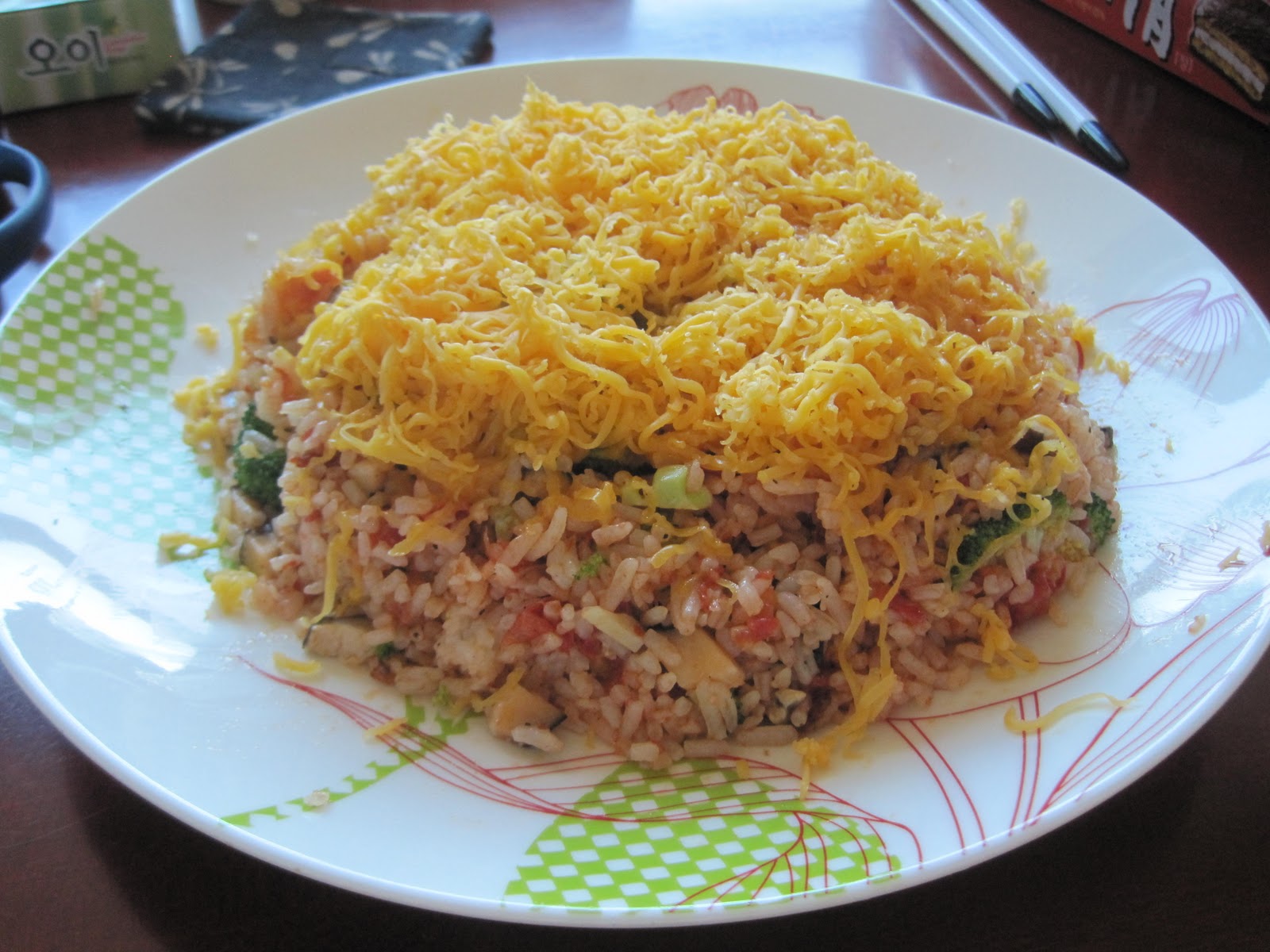
Though I made this, I have to give credit to M. for the idea. Made this for lunch this past Tuesday. I had made the omuraisu (omelette rice) filling but using Jasmine rice instead of Korean short-grain, which I normally use, and I was worried it wasn't going to hold together very well (the grains are more distinct with Jasmine). Then, M. suggested I just make a flat omelette and drape it over the mound of rice (the cheese blanket, I should say, was his idea too). Isn't it purdy?:
This time I added canned diced tomatoes, sliced pyogo 표고 mushrooms (my current favorite Korean mushroom, kind of like a shitake, sooo good) and broccoli florets to the rice filling (whatever happened to be on hand).
| Fried rice waiting with cheese blanket |
| Close-up on the masterpiece |
| Looks like some kind of sea creature...a horseshoe crab, perhaps? |
This time I added canned diced tomatoes, sliced pyogo 표고 mushrooms (my current favorite Korean mushroom, kind of like a shitake, sooo good) and broccoli florets to the rice filling (whatever happened to be on hand).
Wednesday, December 8, 2010
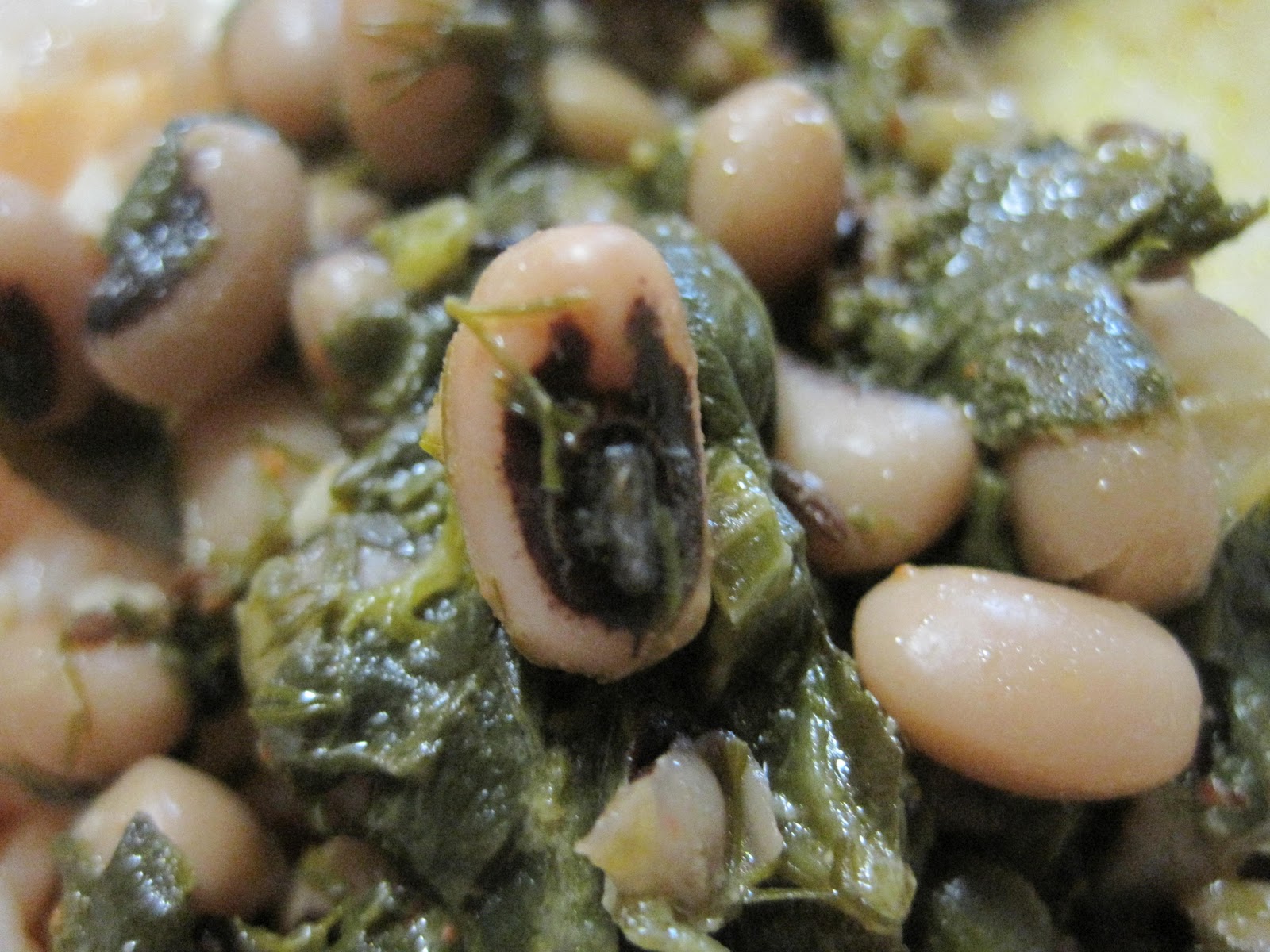
Rorschach Peas
I continue on my Indian/Curry cooking jag, inspired by Madhur Jaffrey and her cookbook, "From Curries to Kebabs: Recipes from the Indian Spice Trail." Tonight it was a Malaysian lentil curry (no photographic evidence of that, unfortunately...).
Everything I've made from that cookbook (4 recipes and counting) has turned out well. Last Sunday I decided to try a black-eyed pea (she calls them 'beans' in the book) curry seasoned with curry leaves and dill. I hadn't been planning on it, but while at the Foreign Food Mart in Itaewon I noticed they had some packs of dill (why didn't they have it when I needed it for my Thanksgiving rice dish? Oh well...) and decided to make it for lunch on Sunday. It was the dill that I was hesitant about...but it turned out to be one of the best curries that I've ever made, and one of M.'s favorites.
Also, happily, it was via this dish that I discovered the frozen limes in my freezer (brought to us from a friend coming back from an unnamed tropical location) were salvageable after all, and I didn't have to use the suggested lemon substitute (which I think wouldn't have been as good).
I served it with tomato rice, as she suggests, although without an oven I couldn't bake it and had to, instead, stir-fry the rice with the tomato-garlic sauce before serving. It was a great combination: The dill and curry leaves blended together beautifully to create a wonderful tang, and the milk (my yoghurt “substitute”) added a bit of creaminess. It was a bit watery, but this allowed for plenty of rich, delicious broth. The comforting tomato-garlic rice balanced the bold flavors of the peas.
It took a bit more time than I anticipated – even though I soaked the peas last night, they still took double the time she indicates to cook (2 hours instead of 50-60 minutes) – but the results were well-worth it. South Asian peas and rice! I could live on the stuff. (I'll post the recipe tomorrow; too good not to share).
A note on the ingredients: I got the dill and dried curry leaves at the Foreign Food Mart in Itaewon (where you can also get plain Denmark yoghurt in individual containers like they have at Costco; not sure why I didn't buy any at that time...). I was delighted to read in Jaffrey's headnote that she recommends Korean coarse-ground red pepper powder (gochu karu 고추가루) – something you can get in any supermarket here! If you can't get the Korean version, she recommends cayenne pepper as a substitute.

A final note: M. thinks that this pea looks like Rorschach from Watchmen:
What do you think?
Everything I've made from that cookbook (4 recipes and counting) has turned out well. Last Sunday I decided to try a black-eyed pea (she calls them 'beans' in the book) curry seasoned with curry leaves and dill. I hadn't been planning on it, but while at the Foreign Food Mart in Itaewon I noticed they had some packs of dill (why didn't they have it when I needed it for my Thanksgiving rice dish? Oh well...) and decided to make it for lunch on Sunday. It was the dill that I was hesitant about...but it turned out to be one of the best curries that I've ever made, and one of M.'s favorites.
Also, happily, it was via this dish that I discovered the frozen limes in my freezer (brought to us from a friend coming back from an unnamed tropical location) were salvageable after all, and I didn't have to use the suggested lemon substitute (which I think wouldn't have been as good).
I served it with tomato rice, as she suggests, although without an oven I couldn't bake it and had to, instead, stir-fry the rice with the tomato-garlic sauce before serving. It was a great combination: The dill and curry leaves blended together beautifully to create a wonderful tang, and the milk (my yoghurt “substitute”) added a bit of creaminess. It was a bit watery, but this allowed for plenty of rich, delicious broth. The comforting tomato-garlic rice balanced the bold flavors of the peas.
It took a bit more time than I anticipated – even though I soaked the peas last night, they still took double the time she indicates to cook (2 hours instead of 50-60 minutes) – but the results were well-worth it. South Asian peas and rice! I could live on the stuff. (I'll post the recipe tomorrow; too good not to share).
A note on the ingredients: I got the dill and dried curry leaves at the Foreign Food Mart in Itaewon (where you can also get plain Denmark yoghurt in individual containers like they have at Costco; not sure why I didn't buy any at that time...). I was delighted to read in Jaffrey's headnote that she recommends Korean coarse-ground red pepper powder (gochu karu 고추가루) – something you can get in any supermarket here! If you can't get the Korean version, she recommends cayenne pepper as a substitute.
A final note: M. thinks that this pea looks like Rorschach from Watchmen:
What do you think?
Tuesday, November 23, 2010
What to do with leftover eggwash?
Whenever I made something breaded that requires an egg wash, I always end up either tossing the extra beaten egg immediately, or put it in the fridge but toss it later anyway because I forget it's there and it goes bad.
Now, though, I know exactly what to do.
The other day I was making breaded chicken cutlets to go with pasta for lunch, and it dawned on me:
Why not just mix the leftover beaten egg in with the hot pasta in the pan, Carbonara-style?
So I did (being careful to cook the egg, stirring constantly, so, not exactly Carbonara...) and the results were really tasty: the egg coated each strand and gave it a silky texture.
The pasta sauce itself was a riff on a green olive pantry sauce that I've been making a lot lately (taking advantage of my huge jars of pimento-stuffed green olives from Costco): chopped green olives, minced garlic, minced green hot peppers (고추) and lots of freshly ground black pepper.
All those times I squandered that extra egg...
Now, though, I know exactly what to do.
The other day I was making breaded chicken cutlets to go with pasta for lunch, and it dawned on me:
Why not just mix the leftover beaten egg in with the hot pasta in the pan, Carbonara-style?
So I did (being careful to cook the egg, stirring constantly, so, not exactly Carbonara...) and the results were really tasty: the egg coated each strand and gave it a silky texture.
The pasta sauce itself was a riff on a green olive pantry sauce that I've been making a lot lately (taking advantage of my huge jars of pimento-stuffed green olives from Costco): chopped green olives, minced garlic, minced green hot peppers (고추) and lots of freshly ground black pepper.
All those times I squandered that extra egg...
Thursday, April 1, 2010
Seoul Cooking: Tomato sauce with anchovies and celery leaves
Since we're on Easter break, I'm at home for the day and didn't feel like going grocery shopping. With the remaining can of stewed tomatoes left in our pantry, I decided to make some pasta sauce for lunch. At the last minute, I threw in some of the leaves of the celery that we bought around Daelim station this past Sunday before they went off.

The result might be considered the Italian-Chinese cousin of my gochu chamchi spaghetti sauce. The celery leaves and lemon, both last minute additions, melded with the other ingredients to create a vibrant, tangy sauce that offset the saltiness of the anchovies (and even though I did add salt to this, you certainly don't need to). "Zesty" would also be an apt (albeit overused) descriptor. It was not unlike the spaghetti puttanesca that I had at l'atelier doux in Gangnam earlier this week.
Tomato sauce with anchovies and celery leaves
1 can (28 oz) stewed tomatoes, chopped
4-5 cloves garlic
1 medium-large onion, chopped
1-2 Tbsp olive oil
2-3 small or one large celery stalk, minced
1 2-ounce can anchovy fillets, finely chopped - Being a salt fiend/anchovy lover, I used the whole can, but you could just as easily use half or three quarters of the can
3 generous handfuls celery leaves, chopped
lemon zest, 1/4 of a lemon
2-3 generous squeezes of fresh lemon juice
red pepper flakes (I used gochukaru), to taste
ground black pepper, to taste
In a medium saucepan, heat the olive oil. Then add the garlic and onion and cook until the onion is soft and the garlic starts to brown (I like that toasted flavor). Add the chopped celery during the last few minutes of cooking the garlic-onion mixture. Next, add the tomatoes, anchovy, hot pepper flakes and black pepper. Simmer until the flavors meld, about 15 minutes. Meanwhile, put a large saucepan of water on to boil. When the water boils, add your pasta of choice and cook until al dente; drain and set aside. If the sauce isn't finished yet, mix the cooked pasta with a little olive oil so it doesn't stick together. When the sauce has thickened, add the celery leaves, stir, and cook for a few minutes until the flavors start blending. Finally, stir in the lemon zest and juice. To serve, toss the pasta with the sauce until coated and top with remaining sauce. Makes approximately 4-5 servings (depending on how saucy you like your pasta).
***
I was so excited to share this that I started writing this entry before I was finished eating it!
The result might be considered the Italian-Chinese cousin of my gochu chamchi spaghetti sauce. The celery leaves and lemon, both last minute additions, melded with the other ingredients to create a vibrant, tangy sauce that offset the saltiness of the anchovies (and even though I did add salt to this, you certainly don't need to). "Zesty" would also be an apt (albeit overused) descriptor. It was not unlike the spaghetti puttanesca that I had at l'atelier doux in Gangnam earlier this week.
Tomato sauce with anchovies and celery leaves
1 can (28 oz) stewed tomatoes, chopped
4-5 cloves garlic
1 medium-large onion, chopped
1-2 Tbsp olive oil
2-3 small or one large celery stalk, minced
1 2-ounce can anchovy fillets, finely chopped - Being a salt fiend/anchovy lover, I used the whole can, but you could just as easily use half or three quarters of the can
3 generous handfuls celery leaves, chopped
lemon zest, 1/4 of a lemon
2-3 generous squeezes of fresh lemon juice
red pepper flakes (I used gochukaru), to taste
ground black pepper, to taste
In a medium saucepan, heat the olive oil. Then add the garlic and onion and cook until the onion is soft and the garlic starts to brown (I like that toasted flavor). Add the chopped celery during the last few minutes of cooking the garlic-onion mixture. Next, add the tomatoes, anchovy, hot pepper flakes and black pepper. Simmer until the flavors meld, about 15 minutes. Meanwhile, put a large saucepan of water on to boil. When the water boils, add your pasta of choice and cook until al dente; drain and set aside. If the sauce isn't finished yet, mix the cooked pasta with a little olive oil so it doesn't stick together. When the sauce has thickened, add the celery leaves, stir, and cook for a few minutes until the flavors start blending. Finally, stir in the lemon zest and juice. To serve, toss the pasta with the sauce until coated and top with remaining sauce. Makes approximately 4-5 servings (depending on how saucy you like your pasta).
***
I was so excited to share this that I started writing this entry before I was finished eating it!
Labels:
anchovies,
celery leaves,
pasta,
recipes,
seoul cooking,
tomatoes
Subscribe to:
Posts (Atom)